Phase 2: "That fateful charge" and the Infantry Firefight
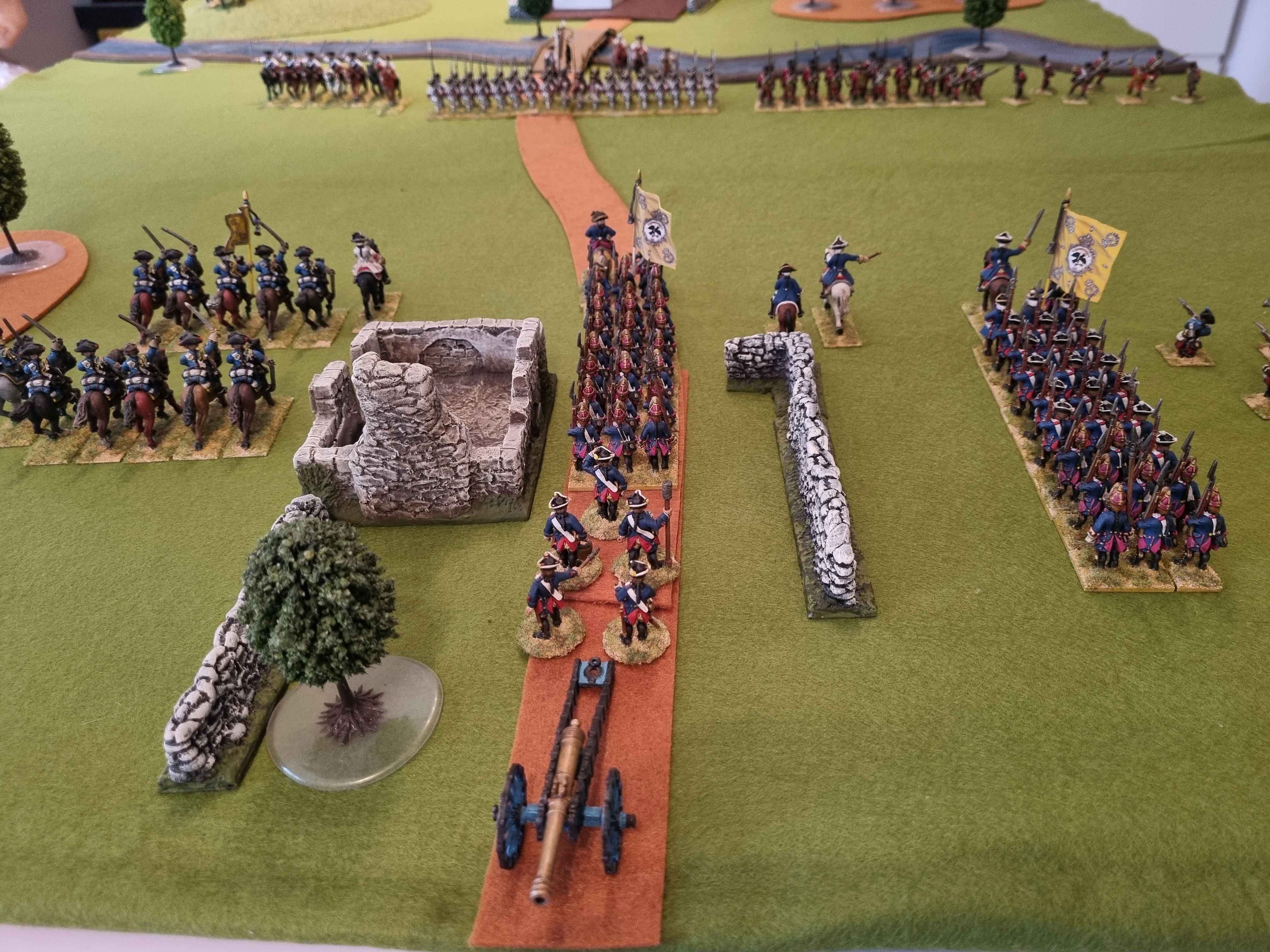
The CiC of the attacking force (to the left in the following photo) has observed the limbering up and movement of the enemy gun section on the hill (top right of photo). He deliberately kept his cavalry out of range of those guns. Now is the right time to charge before the gun section has repositioned [click pictures to enlarge]:
 |
| The cavalry charge is lauched (top left) |
Below, the first Rodenburg squadron clashes with the Reichsbund cuirassiers. But what is the second squadron doing? Instead of backing up the first squadron and ensure, that the melee is won, they gallop right past, aiming for the bridge:
 |
| 1st squadron in melee, 2nd squadron aims for the bridge |
 |
| First Volleys are exchanged |
Phase 3: "The Undoing"
 |
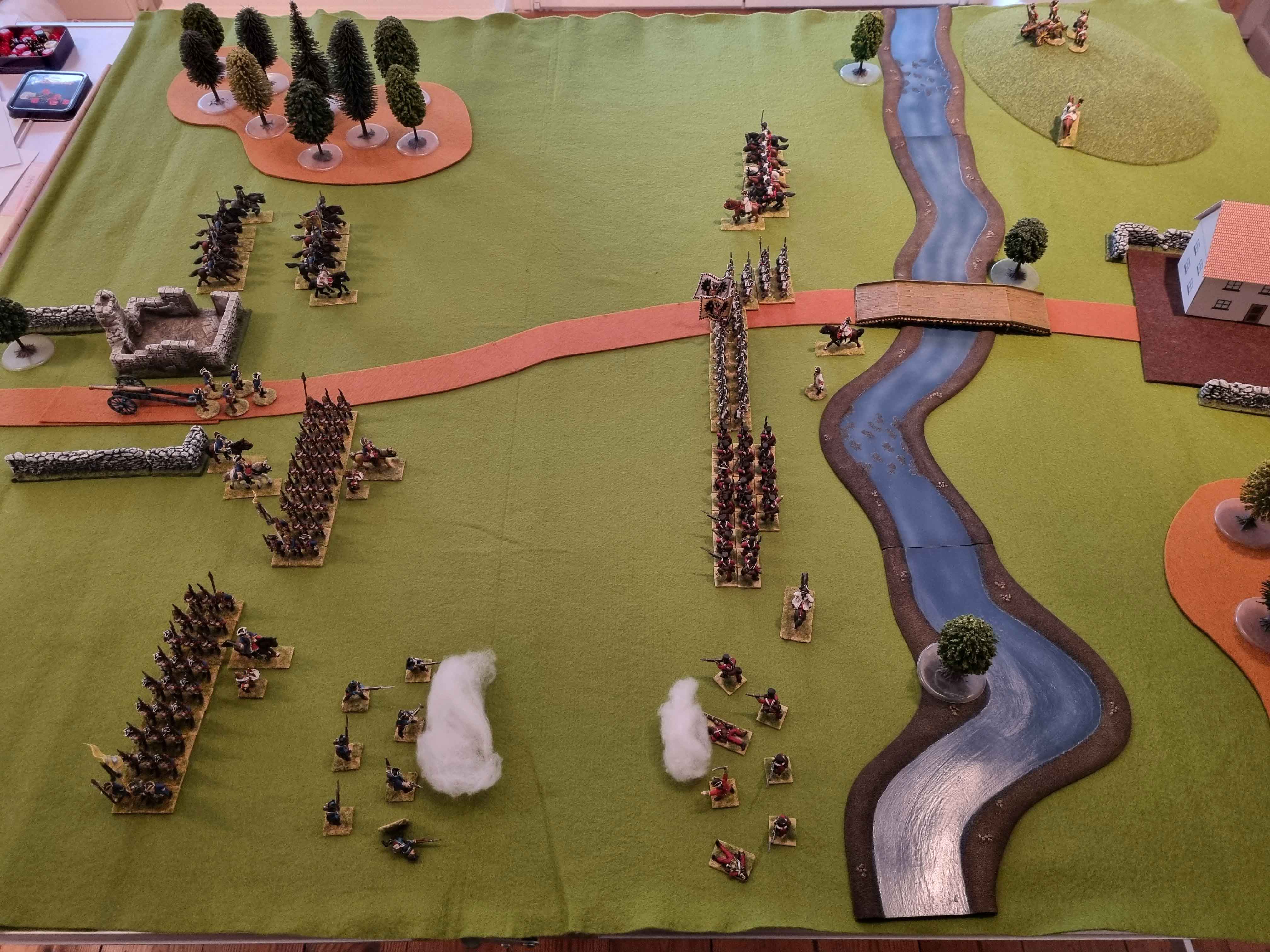
| Top left: 1st squadron lost the melee and retires, canister fire at 2nd squadron on the bridge with no effect! |
 |
| Top center, on the bridge: Desaster and Devastation! The first volley of the Croats wipes out the 2nd squadron |
Also in the above photo at the top: The victorious cuirassiers rally but come under fire from light infantry (Freischar Dreyer) while these themselves are under canister fire. Both take casualties. The limbered up gun tries to seek shelter with the infantry and hastens forward.
 |
| Top left: Desaster again! The cuirassiers charge and overwelm the gun section. The infatry firefight intensifies. |
_red.jpg) |
| Top left: The cuirassiers regroup once more. They receive new orders from their ADC: "Charge the enemy infantry in the rear. Now!" |
 |
| Unable to respond in time, the enemy infantry regiment is routed. |
Also in the above photo at the top right: The Reichsbund Sacher regiment has routed, too. Though overstrength, it could not withstand the continous musketry fire of two enemy units.
 |
| With the bridge still guarded by good-order infantry and a gun section, the attacker breaks off the action and retreats |
Conclusions:
A fantastic game. The light infantry firefight, the high "Price of Overconfidence" due to "That fateful charge" and its bitter consequences. That hero cuirassier squadron. Winning a melee, riding down a gun section and tipping the enemy infantry attack into the abyss.
The rules are fun to play with oders and ADC's moving about. All good stuff.
What is next?
Scouts have reported that Reichsbund reinforcements are on the way to St. Ulrich. A possible Reichsbund counteroffensive?

.jpg)



.jpg)
.jpg)
.jpg)


.jpg)
_1.jpg)
_1.jpg)


